10 Indian Animals That Stump Evolution
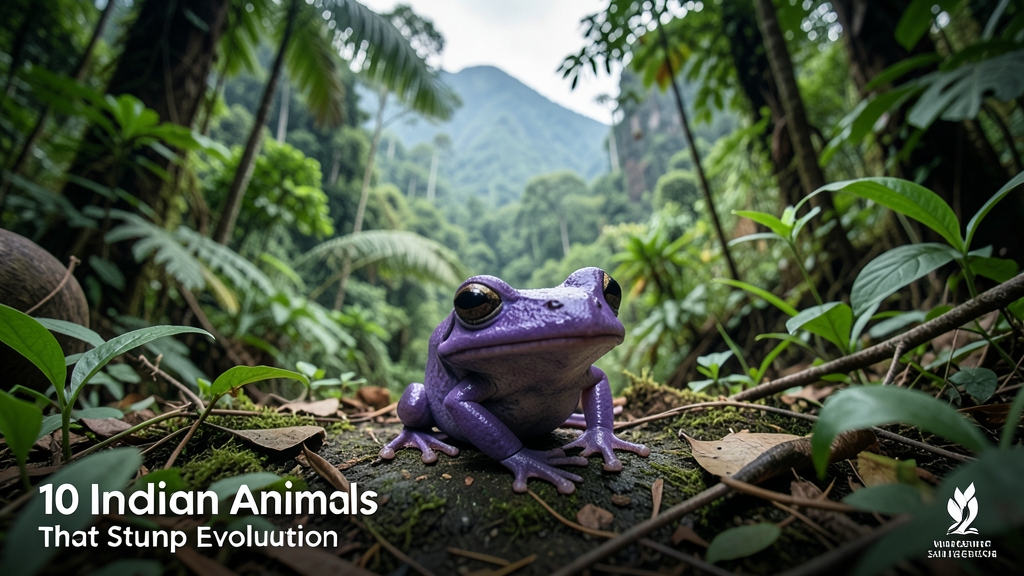
India's diverse landscapes have birthed some of the world's most peculiar creatures. From underground-dwelling amphibians to uniquely adapted crocodilians, these ten animals challenge our understanding of evolution.
The Purple Frog
Found exclusively in the Western Ghats, the purple frog's alien-like appearance sets it apart. With a swollen body, tiny snout, and two-week mating burst, this amphibian remains hidden underground for most of the year, earning its designation as one of nature's most enigmatic creatures.
The Gharial
The gharial's elongated snout and bulbous growth, called a ghara, are specialized for catching fish. As one of the few animals with such a bizarre adaptation, the gharial's unique features highlight the incredible diversity of life in India.
The Malabar Gliding Frog
Gliding frogs of the Malabar region defy gravity with their membranous webbing between limbs. Their ability to leap from tree to tree showcases the evolutionary ingenuity of Indian species.
The Indian Pangolin
Despite being protected, the Indian pangolin's keratin scales and nocturnal habits make it a rare sight. Its unique defense mechanism and diet of ants and termites set it apart from other mammals.
The Slow Loris
With its big eyes and expressive face, the slow loris is a charming yet endangered primate. Its unique venomous bite and slow-motion lifestyle make it a captivating subject of study.
The Indian Wolf
Often confused with domestic dogs, the Indian wolf is a critically endangered species adapted to India's varied habitats. Its social structure and hunting techniques offer insights into the evolution of canines.
The Nilgai
As the largest Asian antelope, the nilgai's adaptations to India's grasslands and its role in the ecosystem demonstrate the continent's rich biodiversity.
The Indian Wild Dog
Known as the "Indian dhole," this social canid is crucial for maintaining prey populations. Its cooperative hunting strategies and social bonds reveal the complexity of predator-prey dynamics.
The Indian Pangolin
Despite its keratin scales, the Indian pangolin is a gentle herbivore. Its unique diet and defense mechanisms highlight the need for conservation efforts.
The Indian Rhinoceros
With its armor-like skin and solitary nature, the Indian rhinoceros is a testament to nature's ability to create formidable yet gentle giants. Its conservation status underscores the importance of protecting such species.
The Asiatic Lion
Once on the brink of extinction, the Asiatic lion now roams the Gir Forest. Its recovery and unique genetic makeup showcase the impact of dedicated conservation efforts.
The Indian Flying Fox
As the largest bat species, the Indian flying fox plays a vital role in pollination and seed dispersal. Its nocturnal habits and large colonies reveal the complex interactions within ecosystems.
These ten Indian animals exemplify the continent's remarkable biodiversity and the wonders of evolutionary adaptation. From underground frogs to unique crocodilians, each species offers a glimpse into the intricate tapestry of life on Earth.
Subscribe to Critter Planet
Get new posts delivered to your inbox.
Optional: get one notification when this blog publishes a new post. You can turn it off in your browser settings.